Most discussions about meeting translation focus on specific platforms: Zoom, Teams, Google Meet. But what about the audio that does not come from a meeting platform at all? Training videos playing in a browser, a recorded webinar you are reviewing, a software demo from a colleague overseas, or a customer support call through a softphone application.
Desktop-based real-time translation tools that work with any computer audio open up possibilities that platform-specific features cannot reach. They also come with real limitations that are worth understanding before you rely on them.
This article covers the practical use cases for translating computer audio in real time, explains how these tools work, and outlines the constraints you should keep in mind.
How Computer Audio Translation Works
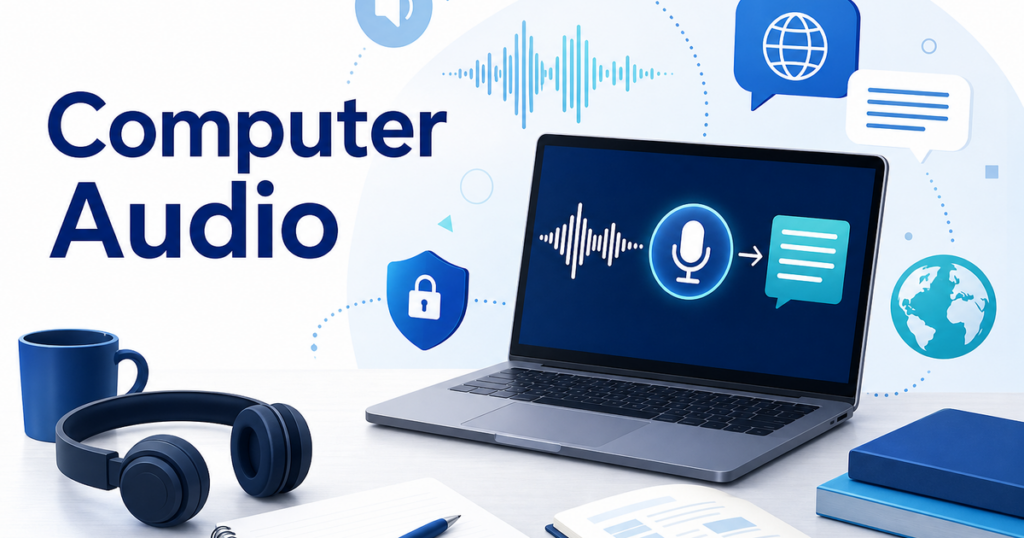
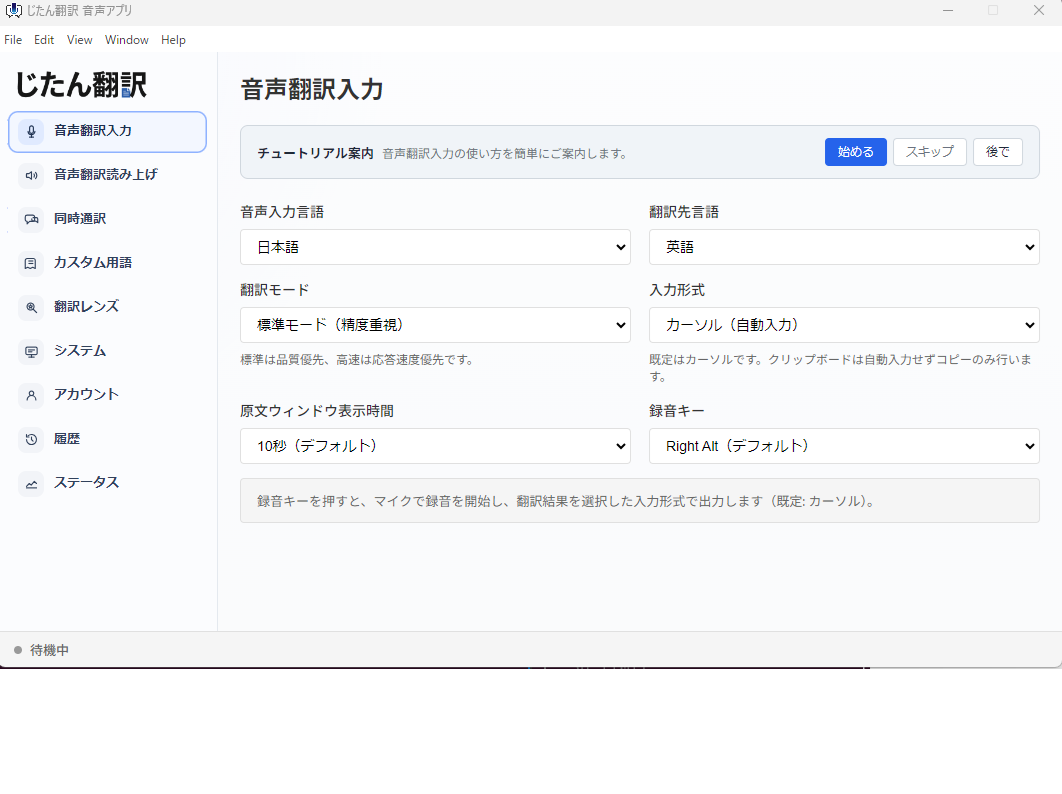
Desktop-based translation tools operate by capturing audio that plays through your computer's sound system. Instead of integrating with a specific meeting platform, they listen to whatever audio is currently playing, whether it comes from a video conferencing app, a web browser, a media player, or any other application.
The process generally follows these steps:
- Audio capture. The tool intercepts the computer's audio output using the operating system's audio APIs.
- Speech recognition. The captured audio is processed through an automatic speech recognition engine that converts the spoken words into text.
- Translation. The recognized text is sent to a machine translation engine that converts it into the target language.
- Output. The translated text appears as on-screen captions, or in some cases, is converted back to speech using text-to-speech synthesis.
Because this process happens on the audio stream rather than through a platform integration, it works with any application that produces sound.
Practical Use Cases
Video Conferencing Across Any Platform
The most obvious use case is translating audio from video calls. Platform-specific translation features only work within their own ecosystem. Zoom translated captions do not help on a Google Meet call, and Teams interpreter features are not available if you are using Webex.
A desktop tool that captures computer audio works regardless of which conferencing platform the meeting runs on. This is particularly useful for organizations that use multiple platforms depending on the client or partner, or for freelancers who join calls on whatever platform the host prefers.
Training Videos and E-Learning Content
Corporate training libraries are full of video content in English that employees around the world need to understand. Translating all of this content professionally is expensive and time-consuming. Real-time audio translation lets employees watch training videos in the original language while reading translated captions on screen.
This approach works especially well for:
- Compliance training modules
- Software tutorials and walkthroughs
- Product demonstration videos
- Recorded conference talks and keynotes
- Safety training materials
Recorded Webinar Review
Teams often review recorded webinars and presentations from industry events, partner organizations, or internal speakers. If the recording is in a language team members do not speak fluently, real-time translation of the audio while watching the video makes the content accessible without waiting for a professional translation or subtitle file.
Customer Support and Sales Calls
Support agents and sales representatives who handle international accounts sometimes join calls through softphone applications, browser-based phone systems, or custom CRM integrations that do not have built-in translation features. A desktop audio translation tool can provide real-time translation for these calls without requiring changes to the existing call workflow.
Podcasts and Audio Content
Business podcasts, industry interviews, and audio briefings are increasingly common sources of professional information. Real-time translation of podcast audio lets non-native speakers follow along with content that would otherwise be inaccessible, broadening the range of information sources available to multilingual teams.
Live Streams and Virtual Events
Industry live streams, product launch events, and virtual conferences often broadcast through platforms that may not offer translation in your target language. A desktop audio translation tool provides a way to follow these events in real time without relying on the event organizer to provide translation.
Understanding the Limitations
While translating computer audio in real time is a powerful capability, it has important constraints that affect quality and reliability.
Audio Quality Dependency
The single biggest factor in translation accuracy is audio quality. The translation tool can only work with the audio it receives. If the source audio is muffled, echoey, or full of background noise, the speech recognition step will produce errors that cascade into the translation.
Common audio quality issues include:
- Low-bitrate internet calls where compression artifacts distort speech
- Speakerphone audio that picks up room echo and ambient noise
- Multiple speakers talking simultaneously that the tool cannot separate
- Music or sound effects mixed with speech in videos
Latency
Real-time translation is not instantaneous. There is a measurable delay between when a word is spoken and when the translated output appears. This latency comes from three sources: speech recognition processing, translation processing, and output rendering.
In practice, latency typically ranges from one to five seconds depending on the tool and the complexity of the speech being translated. For most meeting and presentation scenarios, this delay is manageable. But for fast-paced conversations where participants react quickly to each other, the lag can make the translation feel out of sync.
Speaker Identification
Most audio translation tools cannot distinguish between different speakers. When multiple people talk in a meeting or video, the tool translates everything as a single stream. This can make it hard to follow who said what, especially in panel discussions or multi-participant meetings.
Platform-specific features sometimes have an advantage here because they can access speaker metadata from the meeting itself.
Specialized Vocabulary
Technical jargon, product names, company-specific terminology, and industry acronyms often get mistranslated. General-purpose translation engines are trained on broad corpora and may not know that "MRR" means monthly recurring revenue in a SaaS context or that a particular product name should not be translated at all.
Some tools allow custom glossaries that can help with this, but setting them up requires ongoing maintenance.
Accent and Dialect Variability
Speech recognition accuracy varies significantly based on the speaker's accent and dialect. A tool that performs well with standard American English may struggle with Scottish English, Indian English, or Nigerian English. Similarly, performance for Spanish varies depending on whether the speaker is from Spain, Mexico, or Argentina.
No Access to Visual Context
Platform-integrated features can sometimes combine audio with visual cues, such as shared slides or screen content, to improve translation accuracy. A desktop audio-only tool does not have this advantage. It translates purely based on what it hears, which means it may miss context that would clarify an ambiguous word or phrase.
Best Practices for Better Results
Despite these limitations, you can take concrete steps to improve the quality of real-time computer audio translation.
Optimize Your Audio Setup
- Use headphones instead of speakers to prevent the microphone from picking up translated output and creating a feedback loop.
- Close unnecessary applications that might produce notification sounds or other audio interference.
- If possible, ask meeting participants to use headsets to improve the quality of the audio reaching your computer.
Adjust Expectations by Content Type
Not all content is equally suited to audio translation. Highly structured presentations with clear speakers and predictable vocabulary will translate much better than free-flowing conversations with multiple participants, interruptions, and rapid topic changes.
Use audio translation as a comprehension aid for structured content and a general orientation tool for unstructured conversations. Do not rely on it for situations where precise wording matters.
Combine with Other Resources
When reviewing recorded content, pause and replay sections where the translation seems off. For live meetings, follow up with written summaries or notes to confirm key points. Pairing audio translation with written follow-up reduces the risk of acting on a mistranslated detail.
Test Before Critical Moments
If you plan to use audio translation for an important meeting or presentation, test it with similar content beforehand. Record a short sample of the speaker's audio and run it through the translation tool to gauge quality. This gives you a realistic expectation of how well the tool will perform under actual conditions.
When to Choose Computer Audio Translation Over Alternatives
Computer audio translation is not always the best option. Here is a quick decision framework:
Use computer audio translation when:
- You need to translate audio from a platform that does not have built-in translation features
- You attend meetings on multiple platforms and want a single tool that works everywhere
- You are reviewing recorded content that does not have subtitles
- The meeting or content is informational rather than high-stakes
Use platform-specific features when:
- Your meeting platform supports the languages you need
- Speaker identification and meeting integration matter
- You want the simplest setup with no additional software
Use human interpreters when:
- The conversation involves legal, medical, or financial decisions
- Accuracy is more important than convenience
- The content is highly technical or specialized
- You need professionally verified interpretation
Security and Privacy Considerations
When translating computer audio, it is important to understand what happens to the audio data your tool captures.
Audio Processing Location
Most desktop translation tools process audio through cloud-based servers rather than entirely on your local machine. This means the audio from your meetings, videos, and calls is transmitted over the internet to a third-party service for processing. Before using any audio translation tool in a professional context, check the provider's documentation to understand:
- Whether audio is processed locally or in the cloud
- Whether audio data is stored after translation is complete
- How long any stored data is retained
- What security measures protect the data in transit and at rest
Confidential Content
If you work with confidential business information, proprietary discussions, or personal data, consider whether routing audio through a third-party translation service is appropriate. For highly sensitive meetings, the risk of audio data exposure may outweigh the convenience of real-time translation.
Organization Policies
Many organizations have acceptable use policies that govern which third-party tools can process company information. Before deploying audio translation tools across your team, check with your IT or security team to ensure the tool meets your organization's data handling requirements.
Choosing the Right Tool for Your Workflow
With these considerations in mind, here is a practical framework for selecting a computer audio translation tool:
For Individual Professionals
If you are a single user who needs to follow multilingual meetings and content, prioritize ease of setup and reliability. Look for a tool that you can activate with minimal configuration and that consistently produces readable or listenable output across the platforms you use most.
For Teams
If you are deploying translation for a team, consider tools that offer centralized management, consistent configuration, and volume pricing. The ability to share custom glossaries across team members ensures terminology consistency.
For Organizations with Compliance Requirements
If your organization operates in a regulated industry, prioritize tools that offer clear documentation of their data handling practices, support enterprise security requirements, and provide audit logs of translation activity.
The Bottom Line
Translating computer audio in real time fills a gap that platform-specific features leave open. It gives you a single tool that works across any application, any platform, and any type of audio content. For everyday meetings, training videos, and informational content, it is a practical and cost-effective way to stay informed across language barriers.
The key is understanding its limits. Audio quality, latency, vocabulary, accent variability, and data privacy all affect the experience. By managing these factors and setting appropriate expectations, you can get reliable value from computer audio translation without over-relying on it for situations that demand higher accuracy.