Real-Time Translation for Interviews: What Works and What Needs Care
Interviews cross language boundaries more often than many people realize. A hiring manager interviews a candidate who speaks Mandarin. A UX researcher conducts user interviews with Spanish-speaking participants. A journalist interviews a source in French. A market researcher gathers insights from German-speaking customers. In each case, the interviewer needs to understand the other person clearly and respond in a way that builds rapport and trust.
Real-time translation tools can help bridge the language gap during interviews, but interviews have specific characteristics that make translation more challenging than in other meeting contexts. This article covers what works, what needs care, and how to plan for translated interviews.
Types of Interviews That Need Translation
Hiring Interviews
Companies with international teams or multilingual workforces regularly interview candidates who speak different languages. The interviewer needs to assess the candidate's skills, experience, and communication ability. When a translation layer sits between them, the interviewer must account for the distortion that translation introduces.
A candidate's communication skills, which are often a key evaluation criterion, cannot be fully assessed through a translation layer. Nuances in word choice, tone, and persuasive ability may be lost or altered. Interviewers should be aware of this limitation and adjust their evaluation criteria accordingly.
User Research Interviews
UX researchers, product managers, and market researchers conduct interviews to understand user needs, pain points, and behaviors. These interviews rely on open-ended questions, follow-up probes, and careful listening for subtle cues. Translation adds a layer of separation between the researcher and the participant's natural expression.
Media and Journalistic Interviews
Journalists and content creators interview sources in multiple languages. Accuracy of quotes and attribution is critical. Real-time translation provides a general understanding of what the source is saying, but translated quotes should not be published without verification by a professional translator.
Customer and Partner Interviews
Business development teams interview potential partners, key accounts, and industry experts across language boundaries. These interviews inform strategy, product direction, and partnership decisions. Accurate understanding of the other party's perspective is essential.
What Works With Real-Time Translation
Structured Interview Formats
Interviews that follow a prepared question set translate more reliably than free-flowing conversations. The structured format means the vocabulary is more predictable, the context is clearer, and the translation tool has fewer surprises to handle.
Prepare your questions in advance and, if possible, have them translated by a professional before the interview. This gives you a reference to check against the real-time translation.
Clear, Direct Language
Interview questions that use simple, direct language translate better than questions with idioms, cultural references, or complex sentence structures. Instead of asking "How did you navigate the pivot to remote work?", ask "How did your team change its work process when you started working from home?"
Written Follow-Up Questions
If the interview format allows it, sending follow-up questions in writing after the session can be more reliable than real-time spoken translation. Written text avoids the speech recognition variable and gives the translation engine cleaner input.
Confirmation and Clarification
Using real-time translation to get the general meaning and then confirming key points through follow-up questions is a practical approach. For example, after a translated answer, the interviewer might say, "Let me make sure I understood correctly. You mentioned that the main challenge was X. Is that right?"
What Needs Extra Care
Assessing Communication Skills
When evaluating a candidate's communication ability through a translation layer, the interviewer is assessing a filtered version of the candidate's communication. The translation may make a clear speaker sound awkward or a vague speaker sound precise. Separate communication skill assessment from technical or domain skill assessment, and note that the translation layer affects the former.
Emotional Nuance
Interviews often reveal emotional cues: enthusiasm, frustration, hesitation, confidence. Real-time translation may flatten these cues because the translation engine optimizes for factual accuracy rather than emotional fidelity. If emotional tone is important to the interview, a human interpreter is more appropriate.
Sensitive Topics
Interviews that cover personal experiences, workplace conflicts, health-related topics, or other sensitive areas require extra care. Translation errors in sensitive contexts can cause embarrassment, misrepresentation, or harm. For these interviews, consider using a human interpreter rather than relying solely on automated translation.
Legal and Compliance Contexts
Some interviews have legal implications: witness interviews, compliance investigations, workplace harassment inquiries. In these contexts, accuracy and completeness of the translation are critical. Automated real-time translation is generally not appropriate for legal-adjacent interviews without a qualified human reviewer verifying the transcript.
Planning a Translated Interview
Before the Interview
- Prepare the question set and have it professionally translated if possible. Even if you are using real-time translation, having a reference translation helps you verify accuracy.
- Create a terminology list for any specialized vocabulary the interview will cover. Product names, industry terms, and organization-specific language should be documented.
- Test the technology before the interview. Audio quality, translation accuracy on sample questions, and the caption display should all be verified in advance.
- Inform the interviewee that real-time translation will be used, and explain how it works. This sets expectations and reduces confusion during the interview.
- Get consent for recording if you plan to record the session for transcript review. Consent requirements vary by jurisdiction.
During the Interview
- Speak at a moderate pace and pause between questions and answers to let the translation catch up.
- Avoid interrupting the interviewee. Let them finish their thought before the translation processes the complete statement.
- Take notes on key points in addition to relying on the translation. Your notes provide a cross-check against the translated transcript.
- Ask for clarification when the translation is unclear. It is better to ask the interviewee to repeat or rephrase than to proceed based on a potentially inaccurate translation.
- Watch for cultural communication differences. Directness, formality, and conversational norms vary across cultures. What sounds like a short or evasive answer through translation may simply reflect a different communication style.
After the Interview
- Review the transcript as soon as possible after the interview while the context is fresh in your mind.
- Flag uncertain sections where the translation seemed unclear or potentially inaccurate. Have these sections reviewed by a bilingual colleague or professional translator.
- Send a written summary to the interviewee for confirmation of key points. This provides an accuracy check and demonstrates respect for the interviewee's time and input.
- Translate follow-up communications carefully. If you send a thank-you note, additional questions, or a summary of outcomes, have these professionally translated rather than relying on automated translation for outgoing communications.
Technology Setup for Interview Translation
Meeting Platform Features
Zoom, Microsoft Teams, and Google Meet offer translated captions that display the translated text on screen during the meeting.
Sources:
- https://support.zoom.com/hc/en/article?id=zm_kb&sysparm_article=KB0059081
- https://learn.microsoft.com/en-us/microsoftteams/meeting-transcription-captions
- https://support.google.com/meet/answer/10964115?co=GENIE.Platform%3DDesktop&hl=en
Microsoft Teams also offers an Interpreter feature that provides translated audio for meeting participants.
Source: https://support.microsoft.com/en-us/office/interpreter-in-microsoft-teams-meetings-and-calls-c7efe2bb-535d-42ab-a5c4-d2d91619b46d
PC-Based Translation Apps
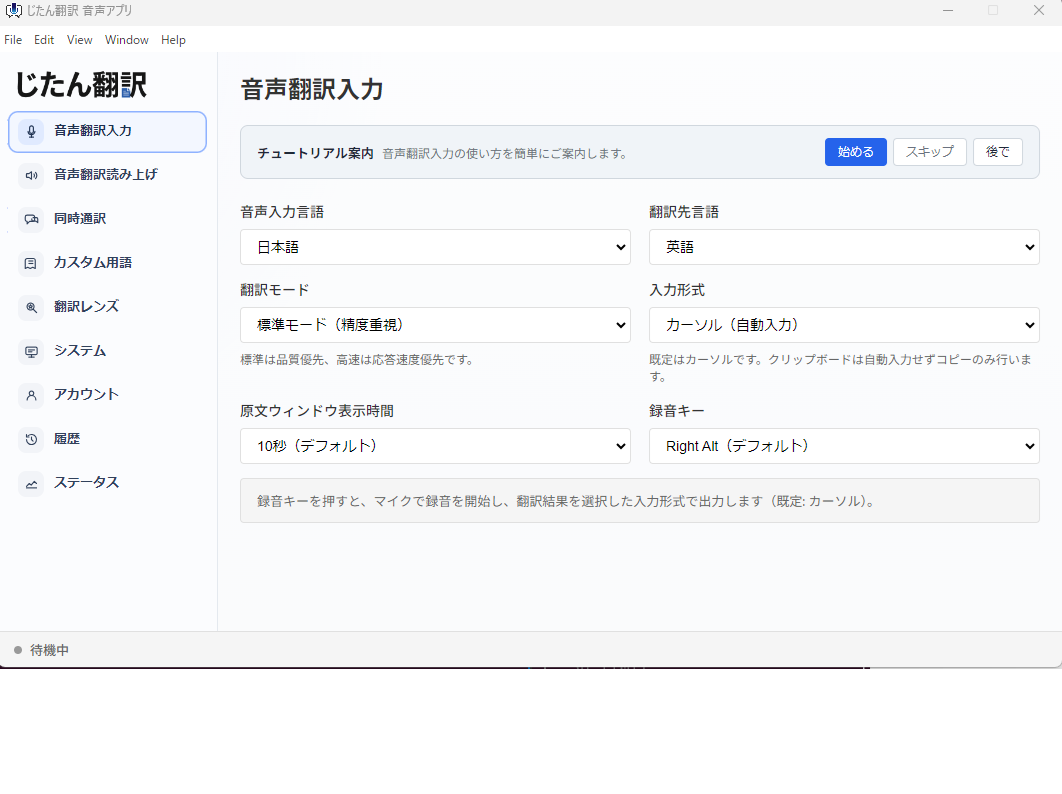
Dedicated translation apps that work with computer audio can provide real-time translation independent of the meeting platform. These tools capture audio from the call and produce translated captions or voice output. They offer flexibility when the meeting platform's built-in translation does not support the language pair you need.
Recording and Transcription
Regardless of the translation approach, recording the interview provides a safety net. You can review the recording later with a professional translator if needed. Many meeting platforms offer automatic transcription, which gives you a written record even if the real-time translation is imperfect.
Consent and Ethics
Informing Interviewees
Transparency about translation technology is both ethical and practical. Let interviewees know:
- That real-time translation will be used during the interview
- How the translation works (captions, voice, or both)
- That the interview may be recorded for transcript review
- How the recording and transcript will be stored and used
Data Handling
Interview recordings and transcripts may contain personal information, business confidential information, or other sensitive data. Handle this data according to your organization's data retention policies and any applicable privacy regulations.
The FTC provides guidance on protecting personal information that applies to recorded and translated interview data.
Source: https://www.ftc.gov/business-guidance/resources/protecting-personal-information-guide-business
Cultural Sensitivity
Different cultures have different norms around interviews, recording, and technology. What feels routine in a US business context may feel intrusive in another cultural context. Research the interviewee's cultural norms around professional interviews and adjust your approach accordingly.
Industry-Specific Interview Considerations
Different industries bring unique requirements to translated interviews. Understanding these differences helps you prepare appropriately.
Technology and Engineering Interviews
Technical interviews involve specialized vocabulary that general-purpose translation tools may not handle well. Programming terms, system architecture concepts, and engineering jargon often have specific translations or may be used in their original English form in other languages. Before a technical interview, compile a list of key technical terms and verify how they are typically expressed in the interviewee's language. Some companies provide interviewees with a glossary of technical terms in advance so both parties share the same vocabulary reference.
Healthcare and Clinical Interviews
Healthcare interviews, whether for hiring, research, or patient feedback, involve medical terminology that must be translated precisely. Errors in translating medical terms can change the meaning of a statement entirely. If the interview covers clinical topics, consider having a medically bilingual reviewer check the translated transcript afterward. The National Institutes of Health offers resources on health literacy in multiple languages that can help frame questions at an appropriate reading level.
Source: https://www.nih.gov/institutes-nih/nih-office-director/office-communications-public-liaison/clear-communication
Financial and Legal Sector Interviews
Interviews in finance and law use terminology with precise legal or regulatory meanings. A term like "fiduciary duty" or "material adverse effect" carries specific legal weight that a general translation may not capture. For interviews in regulated industries, the real-time translation should be treated as a preliminary tool. Follow up with a professionally reviewed transcript for any content that will inform decisions or enter the record.
Academic and Research Interviews
Researchers conducting cross-language interviews for academic studies face methodological considerations. Translation introduces a layer of interpretation that can affect research validity. Academic researchers typically address this by disclosing the translation method in their methodology section, having translations verified by a second bilingual researcher, and noting any sections where the translation was uncertain. The American Psychological Association provides guidance on cross-cultural research methods that addresses translation considerations.
Practical Tips for Interviewers
- Always have a backup plan. If the translation tool fails, have a bilingual colleague available or be prepared to reschedule with an interpreter.
- Keep questions simple and direct. Complex, multi-part questions are harder to translate accurately and harder for the interviewee to answer through a translation layer.
- Build in extra time. Translated interviews take longer than monolingual interviews. Schedule additional time for translation delays and clarification questions.
- Document your process. Note which parts of the interview relied on real-time translation and which were verified by a professional. This documentation is important if the interview findings are used for decisions that affect people.
- Separate translation confidence from content confidence. You may be confident about what was discussed but uncertain about the precise translation of specific statements. Flag this distinction in your notes.
Real-time translation makes cross-language interviews possible in situations where they otherwise would not happen. It works best for structured interviews with prepared questions, factual topics, and interviewers who understand the limitations. For high-stakes interviews where accuracy directly affects people or decisions, combine automated translation with professional review.
For more on meeting translation workflows, see this guide to real-time translation for Zoom, Teams, and Google Meet.