
How to Translate Standard Operating Procedures With AI and Review
Standard Operating Procedures (SOPs) are the backbone of consistent operations. They define how tasks get done, who is responsible, and what standards apply. When your workforce spans multiple languages, translating SOPs accurately is not optional; it directly affects quality, safety, and compliance.
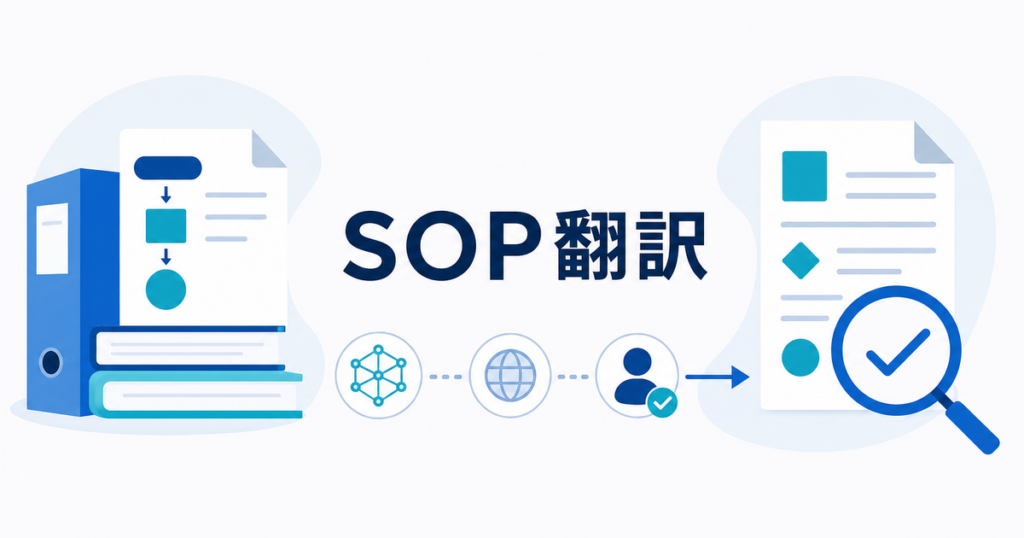
This article walks through a practical approach for translating SOPs using AI-assisted translation with appropriate review steps for each type of content.
Why SOP Translation Demands Care
SOPs differ from other business documents in ways that raise the stakes for translation:
- Operational consequences: An unclear step in a manufacturing procedure can lead to product defects. A mistranslated safety step can lead to injuries. The consequences of poor SOP translation are real and measurable, not theoretical.
- Regulatory implications: In regulated industries (pharmaceuticals, food processing, manufacturing, healthcare), SOPs are often auditable documents. Translations may need to meet the same standard of precision as the original to satisfy regulators.
- Training dependency: New employees learn from SOPs. If the translated version is unclear or uses different terminology than their training materials, learning effectiveness drops and error rates increase.
- Version sensitivity: SOPs get updated regularly. If translated versions fall behind the source, employees may be following outdated procedures without realizing it, which is both a safety and compliance risk.
Anatomy of a Typical SOP
Understanding the structure of an SOP helps plan the translation effort and review priorities:
| SOP Section | Translation Priority | Review Level |
|---|---|---|
| Title and document number | High (identification) | Standard |
| Purpose and scope | High (context) | Standard |
| Definitions and abbreviations | High (foundation) | Careful terminology review |
| Roles and responsibilities | High (accountability) | Organizational review |
| Procedure steps | Critical (operational) | Step-by-step verification |
| Safety warnings and precautions | Critical (safety) | Expert review |
| Quality checkpoints | High (quality) | Technical review |
| References and related documents | Medium (navigation) | Link and document check |
| Revision history | Low (administrative) | Standard |
| Appendices and forms | Varies | Content-dependent |
Preparing SOPs for Translation
Step 1: Finalize and Approve the Source Document
Never translate a draft SOP. The source document should be approved and locked before translation begins. If the source is still being revised, you will end up translating multiple versions and creating confusion about which translation is current. Establish a clear rule: no translation until the source is formally approved.
Step 2: Standardize Terminology
SOPs use precise terminology that must be consistent across documents. Before translating:
- Compile all defined terms: Most SOPs include a definitions section. Ensure every defined term has a consistent, approved translation.
- Identify role-specific language: Job titles, department names, and authority designations should be translated consistently across all SOPs in your library.
- Document abbreviations: Many SOPs use abbreviations that may or may not translate. Determine which abbreviations stay in the source language and which get localized equivalents, and record these decisions.
Step 3: Build an SOP Glossary
Create a glossary specific to your SOP library:
| Category | Examples |
|---|---|
| Process terms | "batch release," "quality hold," "corrective action," "deviation report" |
| Role designations | "line supervisor," "quality manager," "site lead," "production operator" |
| Equipment names | Specific equipment identifiers used in procedures |
| Measurement terms | "tolerance," "specification limit," "acceptance criteria," "in-spec" |
| Safety terms | "lockout/tagout," "personal protective equipment," "emergency shutdown" |
This glossary ensures consistency not just within one SOP but across your entire SOP library.
The Translation Workflow
Generate an AI-Assisted Draft
Upload your SOP document (DOCX, PDF, or other supported format) to a translation tool. The tool generates a draft translation that covers the full document, including procedure steps, safety warnings, and reference lists.
For SOPs stored in document management systems, you may need to export them first. Check whether your system supports bulk export for translation purposes.
Review Procedure Steps Carefully
The procedure section is the most critical part of any SOP translation. Review it step by step:
- Sequence verification: Confirm that the steps are in the correct order. Translation tools should preserve sequence, but it is worth verifying, especially in numbered lists.
- Clarity check: Can a worker follow the translated steps without ambiguity? Each step should have a single, clear action. If a step says "Check the pressure gauge and adjust the valve if the reading exceeds 50 psi," the translated version must make the conditional logic equally clear.
- Conditional logic: SOPs often include conditional statements ("If the temperature exceeds X, proceed to step 7"). Verify that these conditions are translated correctly and that the referenced step numbers are accurate.
- Safety language: Safety warnings and precautions need special attention. They should be unmistakable in the target language and use the appropriate level of urgency.
For guidance on translating documents with structured content, see how to translate PDF files without losing formatting.
Review Definitions and Abbreviations
The definitions section sets the terminology for the entire SOP. Review it to ensure:
- Every defined term has a consistent translation.
- Abbreviations are handled as planned (kept in source language or localized).
- The translated definitions are clear and unambiguous.
Review Roles and Responsibilities
This section assigns accountability. Verify that:
- Job titles are translated consistently with your glossary.
- Authority designations ("responsible for," "approves," "reviews," "authorizes") are translated accurately.
- The organizational hierarchy implied by the roles makes sense in the target language.
Verify References and Links
SOPs reference other SOPs, forms, and external standards. Check that:
- Referenced document numbers are correct (these should not be translated).
- Links to related documents still work.
- Referenced external standards (ISO, ASTM, etc.) are identified by their correct designations.
Reviewing Safety Content
Safety-related SOP content deserves the highest level of review attention. This includes:
- Hazard warnings: Must be clear and unambiguous in the target language. A warning that is unclear in translation is effectively no warning at all.
- Required PPE: Personal protective equipment requirements must be accurately stated. If the source says "chemical-resistant gloves and safety goggles," the translation must specify the same level of protection.
- Emergency procedures: Steps for emergency response must be understandable under stress. Use short, direct sentences in the translation.
- Exposure limits and thresholds: Numerical values must be exact and units must be correct.
For safety-critical SOPs, AI-assisted translation should be treated as a draft step. The review should be conducted by someone with knowledge of the relevant safety regulations and the target language. Reference OSHA training resources for US workplace safety standards and consult local regulations for other regions.
Maintaining SOP Translations Over Time
Version Control
SOPs are versioned documents. Your translation process should mirror the version control of the source:
“ SOP-001_v5.0_EN.docx (source) SOP-001_v5.0_ES_AI-draft.docx SOP-001_v5.0_ES_reviewed.docx SOP-001_v5.0_ES_approved.docx SOP-001_v4.2_ES_approved.docx (previous version, archived) “
When the source SOP gets updated to v5.1, you can immediately see which translations need updating.
Change Management Integration
Connect your SOP change management process to your translation process. When a change is approved in the source SOP, it should trigger a corresponding action for each translated version:
- Minor changes (typo corrections, formatting adjustments): Apply the same change to the translation with a quick review.
- Substantive changes (modified steps, updated safety requirements): Retranslate the affected sections and review the surrounding context to confirm that the change does not affect other steps.
- Major revisions (restructured procedure, new sections): Retranslate the full document, treating it as a new translation with a fresh review cycle.
Review Cycle
Even when SOPs do not change, periodic review of translations is good practice:
- Annual review: Check that all translated SOPs are still current and that no source updates have been missed.
- Incident-driven review: If an operational incident occurs that involves a translated SOP, review that translation immediately for accuracy and clarity.
- Feedback-driven review: If employees report confusion about a translated SOP, prioritize review of that document.
Who Should Review SOP Translations
The ideal reviewer for an SOP translation combines several qualifications:
- Fluency in both languages: Not just conversational fluency but the ability to read and write precisely in a technical register.
- Domain knowledge: Familiarity with the process, equipment, and safety requirements described in the SOP.
- Regulatory awareness: Understanding of the regulatory requirements that apply to the procedure.
In practice, this often means a senior operator or supervisor who works in the target language and has been trained on the procedure. For safety-critical SOPs, consider adding a second reviewer with specific safety expertise.
Scaling Across Your SOP Library
If you have a large SOP library, translating all of it at once is rarely practical. Prioritize by:
- Safety-critical SOPs first: Procedures involving hazardous materials, heavy machinery, or high-risk operations.
- High-frequency SOPs: Procedures performed daily or by large teams where translation errors affect the most people.
- Training SOPs: Documents used to onboard new employees, where unclear translations slow learning.
- Audit-relevant SOPs: Procedures likely to be reviewed by regulators or certifiers.
- Lower-frequency SOPs: Procedures performed occasionally or by small teams.
This prioritization ensures that the most impactful translations get done first.
Security and Access Control
SOPs often contain proprietary process information. When selecting a translation tool:
- Check data handling policies: Does the service retain your documents? For how long?
- Verify encryption: Are files encrypted during upload, processing, and storage?
- Review access controls: Who at the translation service can access your files?
- Consider on-premises options: For highly sensitive SOPs, evaluate whether a locally-deployed translation solution is appropriate.
The FTC vendor security guidance provides a framework for evaluating third-party service security.
Practical Tips for Operations Teams
- Translate SOPs in batches by process area: This ensures terminology consistency within related procedures. When you translate all SOPs related to, for example, quality control at the same time, the reviewer can catch inconsistencies that would be invisible if each SOP were translated in isolation.
- Include translated SOPs in your training program: Do not just translate and file. Incorporate the translated versions into your training workflow so they are actually used. Training programs that reference translated SOPs reinforce correct terminology and build employee confidence in the translated materials.
- Gather feedback from users: The people who follow the SOPs are the best judges of translation clarity. Create a feedback channel for reporting unclear translated steps, and review this feedback on a regular schedule.
- Align translation updates with your SOP review cycle: If SOPs are reviewed annually, schedule translation reviews to coincide. This prevents a backlog of outdated translations from accumulating between review cycles.
- Test comprehension: For critical SOPs, have a native-speaking operator walk through the translated procedure and confirm that each step is understandable. This is especially important for SOPs that involve safety-sensitive operations or complex sequences where a misunderstanding could have consequences.
Summary
Translating Standard Operating Procedures requires careful attention to procedure accuracy, safety language, and terminology consistency. Prepare your source SOPs by standardizing terminology and building a glossary. Use AI-assisted translation to generate efficient first drafts, then apply step-by-step review with particular attention to safety-critical content. Connect your translation process to your SOP change management system so translations stay current, and prioritize safety-critical and high-frequency SOPs when scaling across your library. With a structured approach, translated SOPs can support consistent, safe operations across all languages in your workforce.