
Vietnamese-English Document Translation for US Businesses
Vietnamese is among the most commonly spoken non-English languages in the United States. Vietnamese-American communities are concentrated in California, Texas, Washington, and other states, and US businesses interact with Vietnamese-speaking employees, customers, and partners regularly. From employee handbooks and safety materials to customer-facing documents and business communications, the demand for Vietnamese-English document translation is significant and growing.
This article covers the practical aspects of Vietnamese-English document translation for US businesses, including common document types, key challenges, and a recommended workflow.
The Vietnamese-English Business Landscape in the US
Demographic Context
The US Census Bureau identifies Vietnamese as one of the most commonly spoken non-English languages in American homes. Vietnamese-speaking communities have been established in the US for decades, with deep roots in business, healthcare, education, and local government.
Source: https://www.census.gov/newsroom/press-releases/2023/language-at-home-acs-5-year.html
For US businesses, this means Vietnamese-speaking employees and customers are not a niche audience. They are a substantial population that requires language access across many touchpoints.
Business Drivers
Several factors drive the need for Vietnamese-English document translation:
- Workforce integration: Companies in manufacturing, hospitality, healthcare, and construction employ Vietnamese-speaking workers who need access to policies, safety materials, and training in their language.
- Customer service: Businesses serving Vietnamese-American communities need product information, contracts, and support materials in Vietnamese.
- International trade: US companies doing business with Vietnam need to translate proposals, specifications, and compliance documents.
- Community engagement: Organizations working with Vietnamese communities need outreach materials, program documents, and informational content translated accurately.
Common Document Types
Employee-Facing Documents
- Employee handbooks and policy manuals
- Safety training materials and workplace safety signage
- Benefits enrollment forms and summaries
- Onboarding checklists and orientation materials
- Performance review templates
- Disciplinary action forms
OSHA guidance emphasizes that safety training should be provided in a language employees understand. For workplaces with Vietnamese-speaking employees, this may mean providing Vietnamese-language safety materials or other language support, depending on workforce needs and applicable requirements.
Source: https://www.osha.gov/complianceassistance/training-resources
Customer-Facing Documents
- Product manuals and user guides
- Service agreements and contracts
- Marketing brochures and promotional materials
- Website content and FAQ pages
- Healthcare enrollment materials and patient forms
- Financial services documents
Legal and Compliance Documents
- Terms of service and privacy policies
- Regulatory filings and disclosures
- Consent forms and waivers
- Insurance policy documents
- Housing and rental agreements
Key Challenges in Vietnamese-English Translation
Tonal Language Considerations
Vietnamese is a tonal language with six tones. While tone does not affect written translation in the same way it affects spoken communication, it is relevant when Vietnamese documents include phonetic annotations, pronunciation guides, or when translated content needs to be read aloud (for example, in training materials or voice-overs).
Word Segmentation
Vietnamese is a monosyllabic language where most words consist of a single syllable. However, many concepts are expressed through compound words formed by combining syllables. This creates challenges for translation tools that may not correctly segment Vietnamese text into meaningful word units.
For example, the Vietnamese term for "computer" consists of multiple syllables that individually mean different things. A translation tool that processes each syllable separately will produce an incorrect translation.
Technical and Specialized Terminology
Vietnamese technical writing uses a combination of:
- Native Vietnamese terms for common concepts
- Sino-Vietnamese vocabulary derived from Chinese characters for formal and technical terms
- English loanwords used directly in Vietnamese text, especially in technology and business
- French-derived terms from Vietnam's colonial history, though these are less common in modern writing
A terminology glossary that captures the approved translations for your specific products, processes, and industry context is essential for consistency.
Regional Variation
Vietnamese has regional variations, primarily between Northern, Central, and Southern dialects. In the US, the Southern Vietnamese dialect is more common because of the patterns of Vietnamese immigration. For written documents, the differences are smaller than for spoken language, but vocabulary choices and some grammatical structures may vary.
For US businesses, using a dialect that matches your audience's background improves comprehension and builds trust. When in doubt, the standard written Vietnamese used in official communications is widely understood.
Formatting and Layout
Vietnamese text uses the Latin alphabet with additional diacritical marks for tones. These diacritical marks must be preserved in translation because they change the meaning of words. Some fonts do not render Vietnamese diacritical marks correctly, so verify that your document formatting tools support proper Vietnamese text rendering.
Vietnamese text can be more compact than English for the same content, which may affect layout when translating from English to Vietnamese. Conversely, when translating Vietnamese to English, the text may expand and require layout adjustment.
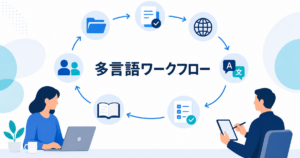
Building a Translation Workflow
Step 1: Identify Your Document Portfolio
List the documents your organization needs in Vietnamese. Prioritize by:
- Impact: How many people does the document affect?
- Risk level: Could a translation error cause harm, legal liability, or financial loss?
- Frequency of use: Is this a one-time document or a recurring template?
Start with high-impact, high-frequency documents: employee handbooks, safety materials, and customer-facing forms.
Step 2: Create a Terminology Glossary
Build a glossary that covers:
- Product names and whether they should be translated or kept in English
- Industry-specific terms with agreed-upon Vietnamese equivalents
- Company-specific vocabulary and acronyms
- Common phrases and their approved translations
Share this glossary with your translation tools (if they support custom terminology) and human translators.
Step 3: Choose Your Translation Approach
Match the approach to the document risk level:
Critical documents such as safety instructions, legal notices, and medical information should use professional human translation with subject matter expertise.
Standard business documents such as employee handbooks, product manuals, and marketing materials can use AI-assisted translation with bilingual human review.
Reference and informational documents such as internal memos, draft materials, and informal communications can use AI translation with spot-check review.
Step 4: Implement Quality Review
Include these checks in your review process:
- Terminology consistency: Verify that key terms are translated the same way across all documents.
- Number accuracy: Confirm that all figures, dates, and measurements are correct.
- Completeness: Ensure no sections or paragraphs were omitted.
- Tone and register: Verify that the Vietnamese translation uses the appropriate level of formality for the audience.
- Diacritical mark accuracy: Check that all Vietnamese diacritical marks are present and correct.
Step 5: Plan for Updates
Documents change over time. Build a process for updating Vietnamese translations when the English source is revised. Maintaining version tracking between English and Vietnamese documents prevents outdated translations from circulating.
Tools and Resources
Document Translation
AI document translation tools can handle formatted files like PDF, DOCX, and XLSX while helping to preserve the original layout. They work well for producing initial drafts that bilingual reviewers can refine.
Google Cloud Translation supports Vietnamese-English translation.
Source: https://cloud.google.com/translate/docs/supported-formats
DeepL includes Vietnamese in its supported languages.
Source: https://support.deepl.com/hc/en-us/articles/360020582359-File-formats
Azure AI Translator provides document translation with Vietnamese support.
Source: https://learn.microsoft.com/en-us/azure/ai-services/translator/document-translation/overview
Community Resources
Vietnamese-American community organizations and chambers of commerce can provide referrals to professional translators who specialize in Vietnamese-English business translation. These translators understand both the linguistic nuances and the cultural context of Vietnamese-American business communication.
Accessibility and Plain Language
The CDC's plain language guidelines apply to translated materials as well. Translated documents should use clear, simple language that the target audience can understand easily.
Source: https://www.cdc.gov/health-literacy/php/develop-materials/plain-language.html
Common Pitfalls
Ignoring Diacritical Marks
Vietnamese diacritical marks change word meanings. A missing or incorrect mark can change "ban" (friend) to a completely different word. Verify that your translation and formatting tools handle Vietnamese diacritical marks correctly throughout the document.
Using Machine Translation Without Review
AI translation has improved for Vietnamese-English, but it still makes errors with compound words, technical terms, and context-dependent vocabulary. Always include a human review step.
Assuming One Translation Fits All Contexts
The same English term may need different Vietnamese translations depending on the context. "Application" translates differently in a software context versus a job context versus a benefits enrollment context. Provide context to your translation tools and reviewers.
Neglecting Cultural Adaptation
Some business concepts and communication styles do not have direct Vietnamese equivalents. Direct translation of American business idioms may confuse Vietnamese readers. Adapt the language while preserving the meaning.
Building Long-Term Vietnamese Translation Capacity
Organizations that serve Vietnamese-speaking populations on an ongoing basis benefit from investing in translation infrastructure rather than treating each document as a one-off project. This section covers strategies for building sustainable translation capacity.
Developing Internal Expertise
Organizations with regular Vietnamese translation needs should cultivate internal translation expertise. This does not mean hiring full-time translators, but rather developing a network of bilingual staff who can handle review tasks, maintain the terminology glossary, and serve as points of contact for translation quality questions.
Practical steps include identifying bilingual employees across departments, providing them with basic translation review training, and allocating time in their schedules for document review. Even a small team of two or three trained reviewers can dramatically improve translation quality over time compared to relying solely on external resources.
Glossary Evolution and Maintenance
A Vietnamese-English glossary is a living document. New terms emerge as your organization introduces new products, services, or processes. Regulatory changes introduce new terminology. Community feedback reveals that certain translations are confusing or have unintended connotations.
Schedule quarterly glossary reviews to incorporate new terms, retire outdated entries, and resolve inconsistencies. Involve both bilingual staff and community members in these reviews to capture perspectives from different Vietnamese-speaking backgrounds. Document the rationale for each glossary entry so that future reviewers understand why a particular translation was chosen over alternatives.
Translation Memory and Consistency
Translation memory tools store previously translated segments so that recurring phrases and sentences can be reused rather than re-translated. For organizations that produce large volumes of Vietnamese documents, translation memory reduces cost and improves consistency. Even without dedicated translation memory software, maintaining a library of previously translated documents provides a reference that translators and reviewers can consult when working on new materials.
Consistent translation of recurring phrases such as "please submit this form by," "for more information contact," and "your rights include" builds familiarity among Vietnamese-speaking readers. When the same organization translates these phrases differently in each document, readers may wonder whether the meaning has changed.
Practical Tips
- Start with your most important documents. Translate the materials that affect the most people first: employee handbooks, safety signage, and key customer-facing forms.
- Build the glossary incrementally. Add terms with each translation project. The glossary grows more valuable over time.
- Use format-aware tools for formatted documents. Reformatting a translated document wastes time. Tools designed to preserve layout help reduce manual cleanup.
- Engage Vietnamese-speaking reviewers. Bilingual team members or contracted reviewers provide the quality check that automated tools cannot.
- Test with your audience. Have Vietnamese-speaking employees or customers review translated materials and provide feedback on clarity and naturalness.
Vietnamese-English document translation is an ongoing operational need for many US businesses. By building a structured workflow with terminology management, appropriate translation tools, and bilingual review, organizations can provide accurate Vietnamese-language materials to their employees and customers without excessive cost or delay.
For more on document translation workflows, see this guide to translating PDFs without losing formatting.