Translating Onboarding Documents for New Hires Across Languages
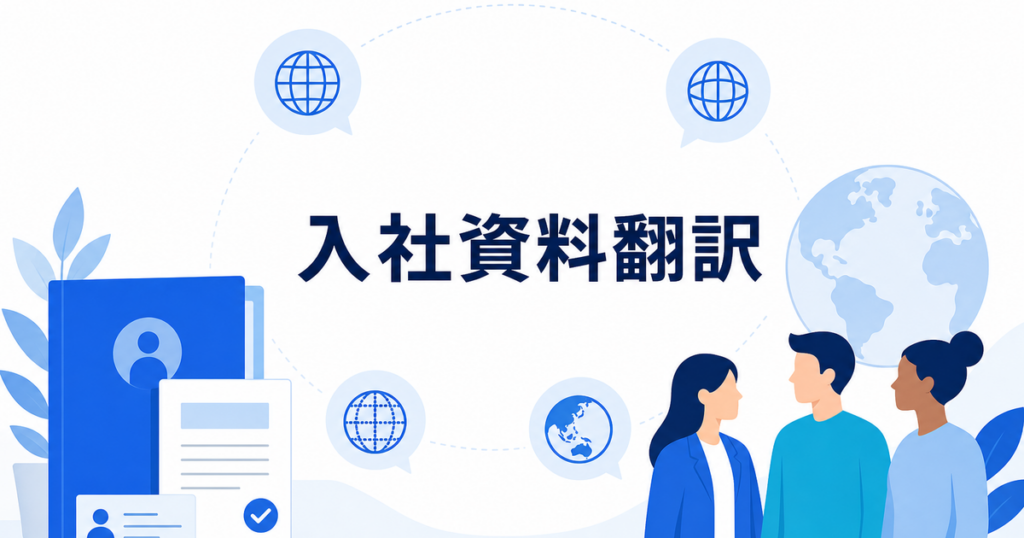
When a company hires across regions or brings on employees who speak different primary languages, onboarding documents become a translation challenge. Employee handbooks, policy guides, benefits summaries, and training materials all need to be understandable to every new hire, not just the ones who read the source language fluently.
This article explains how to approach onboarding document translation in a way that is practical, compliant, and manageable for HR teams.
What Counts as Onboarding Content
Onboarding spans a wide range of document types, each with different translation priorities:
- Offer letters and employment agreements: Legal-adjacent documents that require precise translation. Errors here can create contractual misunderstandings.
- Employee handbooks: Comprehensive policy documents covering conduct, benefits, leave, workplace rules, and dispute resolution procedures.
- Benefits summaries: Descriptions of health insurance, retirement plans, and other benefits, often specific to each country or region.
- IT setup guides: Step-by-step instructions for accessing company systems, setting up email, configuring VPN, and registering devices.
- Training materials: Orientation presentations, compliance training modules, and role-specific training documents that teach new hires how to do their jobs.
- Org charts and team introductions: Structural documents that help new hires understand reporting lines and who to contact.
- Safety and emergency procedures: Critical documents where accurate translation can affect employee wellbeing and legal compliance.
Each category has a different tolerance for approximation. Benefits summaries need accuracy. Safety procedures need both accuracy and clarity. Training materials need to be engaging and comprehensible. Offer letters need legal precision.
Why Onboarding Translation Matters
Poorly translated onboarding materials create real problems that go beyond first-day confusion:
Compliance risk: If a safety procedure is mistranslated, employees may not follow it correctly. If a policy on harassment or data handling is unclear, the company may face liability if an employee violates the policy and claims they did not understand it.
Employee experience: A new hire's first impression of the company is shaped by onboarding. If the materials are in a language they struggle with, they start at a disadvantage that can affect their engagement and early performance.
Time to productivity: When employees cannot understand their training materials, they take longer to become effective in their roles. They also ask more questions of managers and colleagues, creating a hidden productivity cost that ripples across the team.
Equity across locations: When headquarters employees get polished, well-written onboarding materials and remote employees in other regions get rough translations or untranslated documents, it sends a clear message about who the company prioritizes. This affects retention and morale from day one.
Planning Your Translation Approach
Step 1: Prioritize by Impact and Risk
Not every onboarding document needs the same level of translation investment. Rank your documents along two axes: risk level and impact on the new hire experience:
| Priority | Document Type | Translation Approach |
|---|---|---|
| High risk, high impact | Safety procedures, harassment policies, data handling policies | AI draft + professional legal review |
| High impact, moderate risk | Employee handbook, benefits summaries | AI draft + HR team review |
| Moderate impact | IT setup guides, org charts | AI draft + quick review |
| Lower impact | Welcome letters, social guides, team trivia | AI draft, light review |
Step 2: Consolidate and Standardize
Before translating, standardize your source documents:
- Eliminate redundancy: If three departments each maintain their own version of the travel expense policy, consolidate into one authoritative document before translating. Translating three versions creates three chances for inconsistency.
- Update everything: Translate only current documents. Translating an outdated version wastes effort and creates confusion when employees find contradictory information.
- Use plain language in the source: The CDC plain language resources provide guidance on writing clearly. Clear source text produces clearer translations because the translation tool has less ambiguity to resolve.
Step 3: Build an Onboarding Glossary
Create a glossary of terms that appear across multiple onboarding documents:
- Company-specific terms (product names, internal systems, department names, office location names)
- HR terminology (probationary period, PTO, benefits enrollment, performance review cycle)
- Legal and compliance terms (non-disclosure agreement, code of conduct, conflict of interest)
- Benefits terminology (deductible, co-pay, vesting schedule, matching contribution)
This glossary ensures that when an employee reads "PTO" in the handbook and "paid time off" in the benefits summary, both are translated to the same term in the target language.
Translation Workflow for Each Document Type
Employee Handbooks
Handbooks are long, structured documents. They combine policy statements (which need precision) with explanatory text (which needs readability).
- Export the handbook from your document system (DOCX or PDF).
- Generate an AI-assisted translation of the full document.
- Review policy sections carefully: Check that leave policies, disciplinary procedures, and compliance requirements are translated precisely. These sections have legal implications.
- Review explanatory sections for readability: Ensure that the tone remains professional and welcoming, not stiffly formal or overly casual.
- Verify cross-references: Handbooks often reference other documents or internal links. Make sure these still point to the right places and that the referenced document titles match the translated versions.
Benefits Summaries
Benefits documents are tricky because the underlying systems vary by country. A US-centric benefits summary describing 401(k) plans, HSA accounts, and COBRA coverage may not have direct equivalents in other countries.
For benefits translation:
- Translate the general descriptions accurately, keeping the structure and formatting.
- Add local context where the benefit structure differs from the source country. A translated 401(k) description may need a note explaining the local retirement plan equivalent.
- Have a local HR representative review the translated benefits section to confirm it makes sense for employees in that region.
Training Materials and Presentations
Training materials often come as PowerPoint decks or interactive modules. For PowerPoint files:
- Translate all text elements including slide content, speaker notes, and chart labels.
- Check that translated text fits within the slide layout without overflowing text boxes.
- Verify that any embedded media (videos, animations) is still accessible.
- Ensure that quiz questions embedded in training materials are translated with the same care as standalone assessments.
For guidance on translating presentation files while maintaining structure, see translating PDF files without losing formatting.
Safety and Emergency Procedures
These documents deserve the highest level of care:
- AI-assisted translation can produce a draft, but it should be reviewed by someone with knowledge of local safety regulations and terminology.
- Check against local requirements: Safety procedures may need to reflect country-specific regulations, not just a translation of headquarters' procedures. Fire evacuation routes, chemical handling protocols, and emergency contact numbers are all location-specific.
- Test comprehension: Consider having a native speaker who is unfamiliar with the procedures read the translation and explain them back to you. If they cannot, the translation needs revision.
- Reference OSHA training resources for US-specific safety training standards and confirm that your translated materials meet applicable requirements for your region.
Maintaining Translations Over Time
Onboarding documents are not static. Policies change, benefits get updated, and new training requirements emerge. Your translation process needs to handle updates efficiently.
Version Control
Track which version of each document has been translated:
“ EmployeeHandbook_v4.2_EN.docx (source) EmployeeHandbook_v4.2_ES_AI-draft.docx EmployeeHandbook_v4.2_ES_final.docx EmployeeHandbook_v4.1_ES_final.docx (previous version, archived) “
When the source document gets updated to v4.3, you know exactly which translations need to be updated.
Update Triggers
Set up a process where:
- Policy changes automatically trigger re-translation of affected sections.
- Annual reviews include a check of all translated onboarding documents.
- New hire feedback is collected and used to improve unclear translations. A simple question like "Was there anything in the onboarding materials that was unclear?" can surface translation issues.
Who Owns Translation Maintenance
Assign clear ownership:
- HR operations owns the source documents and the update schedule.
- Local HR representatives own the review of translated content for their region.
- Legal or compliance owns the review of policy and safety-related translations.
Without clear ownership, translations drift out of date and nobody notices until a new hire asks a question the translated document should have answered.
Handling Multiple Target Languages
If your company hires in many countries, translating into dozens of languages is a significant undertaking. Practical approaches:
- Start with your highest-volume hiring languages. If 40% of your new hires speak Spanish, start there.
- Use AI-assisted translation for all languages to produce initial drafts.
- Prioritize professional review for high-risk documents (safety, legal, policy) across all languages.
- Accept lighter review for lower-risk documents in languages where you have less internal capacity, with a plan to improve over time.
- Consider a tiered approach: Full review for your top three hiring languages, lighter review for the next five, and AI-only for the rest until volume justifies more investment.
Practical Tips for HR Teams
- Translate in batches: Group documents by type and translate all materials for a given language together. This ensures terminology consistency across the onboarding package.
- Include a feedback mechanism: Add a simple way for new hires to flag unclear translations. A short survey at the end of the first week works well and normalizes the process of reporting issues.
- Keep source and translations visually similar: When the translated document looks like the original, new hires can more easily reference both versions if needed.
- Plan for accessibility: Ensure translated documents meet the same accessibility standards (screen reader compatibility, contrast ratios, alt text for images) as the source documents.
- Budget for ongoing maintenance: Translation is not a one-time cost. Build it into your annual HR operations budget.
Handling Legal and Compliance Documents
Onboarding documents that carry legal weight require special handling:
- Offer letters and employment agreements should be translated with legal review. Some jurisdictions or internal policies may require a declaration or other formal documentation for translated employment materials. Confirm the requirement before relying on the translated version.
- Non-compete and non-disclosure agreements contain specific legal language that must be precise. AI-assisted translation can produce a draft, but an employment attorney familiar with the target jurisdiction should review the final version.
- At-will employment statements and other jurisdiction-specific legal concepts may not have direct equivalents in other countries. Work with local counsel to determine the appropriate language.
- Data privacy notices are increasingly regulated across jurisdictions. Ensure that your translated privacy notices accurately reflect the rights and obligations described in the source document and that they comply with local data protection requirements.
For these documents, clearly mark the source-language version as the authoritative legal document. The translation serves as a reference for the employee, but in case of any discrepancy, the original governs.
Measuring Onboarding Translation Effectiveness
To evaluate whether your translated onboarding materials are working:
- Track new hire satisfaction scores by language. If satisfaction is consistently lower for certain languages, the translation quality may be a factor.
- Monitor time-to-productivity by location. Longer ramp-up periods in certain regions may indicate that training materials need improvement.
- Collect specific feedback on translation clarity through post-onboarding surveys.
- Compare assessment scores across languages. If scores on onboarding assessments are systematically lower in certain translated versions, the translation may be affecting comprehension.
Summary
Translating onboarding documents requires prioritization, preparation, and a sustainable maintenance process. Start with your highest-risk and highest-impact documents. Standardize your source content before translating. Build a terminology glossary for consistency. Use AI-assisted translation to generate drafts efficiently, then apply the appropriate level of review based on document type and risk level. Connect your translation updates to your policy update cycle so materials stay current across all languages. The result is an onboarding experience that works equally well for every new hire, regardless of language.