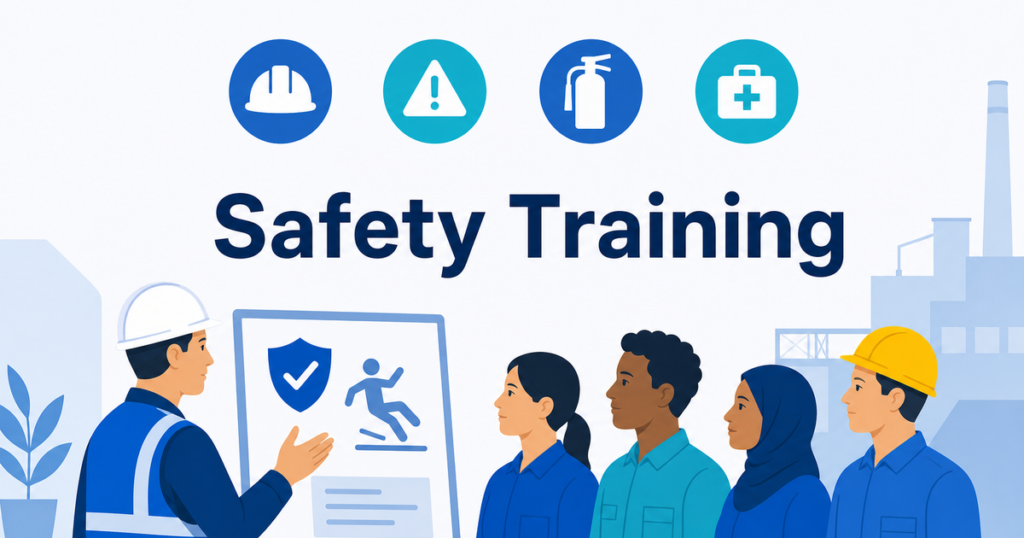

Workplace safety training saves lives and prevents injuries. But when your workforce speaks multiple languages, training materials that exist only in English can leave non-native speakers without the understanding they need to stay safe on the job.
The Occupational Safety and Health Administration (OSHA) recognizes this challenge and provides resources to help employers deliver effective training across language barriers.
Source: https://www.osha.gov/complianceassistance/training-resources
This article outlines a practical workflow for translating safety training materials, from slide decks and PDFs to signage and quick-reference cards.
Why Multilingual Safety Training Matters
OSHA requires that safety training be provided in a language and vocabulary that workers can understand. This is not a suggestion. It is a regulatory expectation.
Source: https://www.osha.gov/harwoodgrants/best-practices
When training is delivered only in English to a workforce that includes non-English speakers, several things happen:
- Workers nod along without understanding. They may not ask questions because they do not want to appear unqualified or because they do not know what to ask.
- Critical procedures are misinterpreted. Lockout/tagout steps, chemical handling protocols, and emergency evacuation routes all require precise understanding. A partial understanding can be more dangerous than no understanding.
- Incident rates rise. Data consistently shows that language barriers contribute to workplace injuries, particularly in construction, manufacturing, and food processing.
Types of Safety Materials That Need Translation
Safety communication happens across multiple formats. Each has different translation requirements.
Training Presentations (PPTX)
Slide decks used in safety training sessions often combine text, images, diagrams, and speaker notes. Translating these requires a tool that handles PPTX files natively and preserves:
- Slide layout and text box positions
- Embedded diagrams and flowcharts (text within them)
- Speaker notes (these are often the most important content, since trainers use them to explain concepts in depth)
- Table formatting for checklists and procedures
Training Manuals and Handouts (PDF and DOCX)
Longer-form materials distributed as handouts or reference guides need clean translation that maintains:
- Numbered step sequences (critical for procedures)
- Warning labels and callout boxes
- Table of contents and index entries
- Headers and footers with document version information
Safety Signs and Labels
Workplace signs, chemical labels, and equipment warning tags need to follow specific formatting and color standards. While OSHA sets content requirements, the visual design often follows ANSI Z535 standards.
These are short-form translations where every word matters. AI translation can produce a draft, but a bilingual safety professional should review the final version before it goes on the wall.
Quick-Reference Cards
Laminated cards carried by workers (e.g., for hazmat placard identification, first aid steps, or emergency contacts) need concise, accurate translation in a very small space. Length control is critical here, because the card has a fixed size.
The Translation Workflow for Safety Materials
Step 1: Inventory Your Safety Content
Before translating anything, create a list of all safety materials currently in use. Include:
- Training slide decks
- Written procedures and SOPs
- Safety data sheets (SDS) used internally
- Emergency procedure posters
- Equipment-specific instructions
- New-hire orientation materials
- Toolbox talk guides used by supervisors
Rank them by frequency of use and consequence of misunderstanding. Prioritize materials related to the highest-risk activities.
Step 2: Prepare Source Files for Translation
Clean, well-formatted source files produce better translations.
For slide decks:
- Make sure all text is in editable text boxes, not embedded in images.
- Use consistent heading styles.
- Move long explanatory text from slides into speaker notes where possible.
- Remove outdated content before translating (no point in translating obsolete procedures).
For PDFs and DOCX files:
- Apply heading styles to all section titles.
- Use Word tables instead of tab-spaced columns.
- Number all procedure steps consistently.
- Check that the document has a logical heading hierarchy.
Step 3: Run the Translation
Upload your prepared files to a document translation tool. For safety materials, the tool needs to handle:
- PPTX with speaker notes. Many translation tools skip speaker notes. For safety training, the speaker notes often contain the most important explanations.
- Tables and checklists. Step-by-step procedures are usually formatted as tables. If the table structure breaks, the procedure becomes unreadable.
- Formatting preservation. Warning labels, caution boxes, and note callouts depend on visual formatting to convey urgency.
Step 4: Bilingual Safety Review
This step is non-negotiable for safety materials. AI translation produces a draft, but safety content requires review by someone who:
- Speaks the target language fluently
- Understands the safety procedures being described
- Can identify terms where a literal translation could create confusion
For example, the English word “guard” in a machine safety context could mean a physical shield, a person watching equipment, or a protective measure. A bilingual safety reviewer can catch these ambiguities.
If you do not have a bilingual safety professional on staff, consider hiring a translator with safety or industrial experience for the review step.
Step 5: Format and Distribute
After the review is complete:
- Regenerate the table of contents for translated manuals.
- Verify that all cross-references point to the correct sections.
- Check that translated text fits within signs, labels, and cards without truncation.
- Print or distribute the finalized materials.
- Train supervisors on where to find translated versions so they can point workers to them.
Special Considerations for Safety Translation
Consistent Terminology
Safety communication depends on consistent use of specific terms. “Lockout,” “tagout,” “confined space,” and “personal protective equipment” all have defined meanings. Create a terminology glossary for each target language that:
- Lists key safety terms in English and the target language
- Specifies the approved translation for each term
- Is shared with all bilingual reviewers
This glossary ensures that the same concept is always translated the same way, whether it appears in a slide deck, a manual, or a wall sign.
Visual Communication as a Complement
Translation is one part of multilingual safety communication. Visuals are the other. Wherever possible:
- Use universally recognized symbols alongside text.
- Include diagrams that show the correct procedure (e.g., proper lifting technique, PPE donning sequence).
- Color-code hazards consistently across all languages.
Visuals do not replace translated text, but they reduce the chance of misunderstanding.
Updating Translated Materials
When safety procedures change, translated materials must be updated too. Build a process that:
- Flags all translated versions when an English source document is revised.
- Translates only the changed sections.
- Has the updated sections reviewed by a bilingual safety professional.
- Replaces all copies of the old translated version.
Outdated safety translations can be more dangerous than no translation at all, because workers may rely on information that is no longer correct.
Training Delivery Tips for Multilingual Groups
Translating materials is half the equation. How you deliver the training matters just as much.
- Speak slowly and clearly when presenting in English to a multilingual audience.
- Pause after each major concept to allow workers to consult translated materials or ask questions.
- Use the “teach-back” method. After explaining a procedure, ask a worker to demonstrate or explain it back to you. This confirms understanding regardless of language.
- Provide translated materials in advance so workers can review them before the training session.
- Have a bilingual colleague available during training to answer questions in the workers’ preferred language.
Handling Industry-Specific Safety Terminology
Different industries have their own safety vocabularies. Construction, manufacturing, food processing, healthcare, and agriculture all use specialized terms that general-purpose translation may not handle correctly.
If your industry has a safety glossary or standard terminology reference, use it as the foundation for your translation glossary. Industry associations, OSHA alliance programs, and trade publications often publish terminology guides that can help ensure your translations use recognized terms rather than improvised ones.
For example, in construction, terms like “scaffold,” “fall protection,” “trench,” and “excavation” have specific regulatory definitions. A bilingual reviewer with construction safety experience will know whether the target language has established equivalents for these terms or whether the English term should be used with an explanatory note.
Measuring the Effectiveness of Translated Training
Translation is an investment, and like any investment, you should evaluate whether it is working. Signs that your translated safety materials are effective:
- Fewer safety incidents among non-English-speaking workers in the periods following translated training sessions
- Higher quiz or assessment scores when workers are tested on safety procedures in their preferred language
- More questions asked during training, indicating that workers understand enough to engage with the material
- Fewer requests for clarification from supervisors about procedures that were covered in translated training
Conversely, if incidents, near-misses, or confusion persist after translated training is delivered, the issue may be the translation quality, the training delivery method, or both. Investigate rather than assuming the translation alone solved the problem.
Building a Safety Translation Library
Over time, aim to build a library of translated safety materials that covers your most critical procedures. Start with:
- Emergency evacuation procedures
- Lockout/tagout procedures
- Chemical handling and SDS reference guides
- PPE requirements by work area
- Injury reporting procedures
These five categories address the most common and most consequential safety scenarios. Once they are translated and reviewed, you have a foundation to build on.
Summary
Translating safety training materials is a regulatory expectation and a practical necessity for multilingual workforces. The workflow is straightforward: inventory your materials, prepare clean source files, translate with a tool that preserves formatting, have a bilingual safety professional review the output, and distribute finalized materials.
The critical step that separates adequate safety translation from dangerous shortcuts is the bilingual review. AI translation handles the volume; the human reviewer ensures accuracy where it matters most.
Getting Started This Week
If your business has multilingual employees and your safety materials exist only in English, start here:
- Identify the top three safety-critical documents in your workplace.
- Check whether official translated versions are available from OSHA or your state safety agency.
- For documents without official translations, create a DOCX version of the English content.
- Translate it and assign a bilingual reviewer.
- Post the translated version alongside the English original.
Five steps. This week. Your workers’ safety depends on understanding the procedures you have put in place. Make sure they can.
What to Discuss With Your Safety Team
Before launching a safety translation project, bring your safety manager, operations lead, and a bilingual supervisor together to align on these points:
- Which procedures have the highest injury rates? Prioritize translating materials related to tasks where incidents have actually occurred, not just the procedures that are easiest to translate.
- Are there company-specific terms that differ from OSHA standard terminology? If your workplace uses internal names for equipment or processes, make sure the translation glossary accounts for both the standard term and the internal term.
- Who can serve as a bilingual safety reviewer? Identify specific individuals now, before you need them. A bilingual office worker may not have the safety knowledge to review lockout/tagout procedures accurately.
- What is the review turnaround expectation? Safety materials often need to be updated quickly after a near-miss or incident. Agree on a review timeline so bilingual reviewers know what is expected of them.