When to Use Human Translation Review on AI Drafts
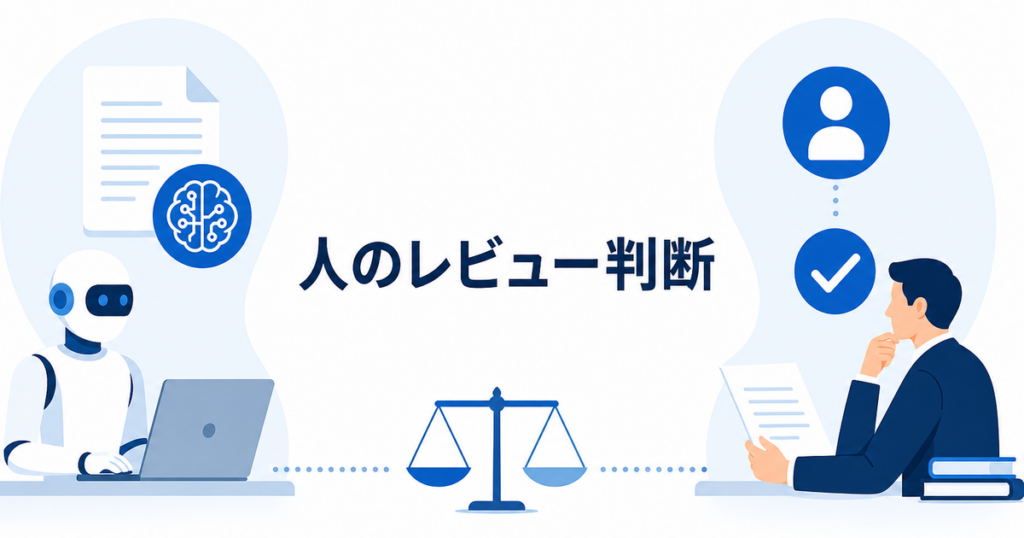
AI translation produces review-ready drafts quickly, but it is not a replacement for human judgment. The question is not whether AI translation is good enough in general. The question is whether it is good enough for your specific document, audience, and risk level. Sometimes it is. Sometimes it is not. This article helps you decide when human review is worth the investment and when an AI draft alone is sufficient for your needs.
The Spectrum of Translation Review
Think of translation review as a spectrum, not a binary choice. On one end, you publish raw AI output without looking at it. On the other end, you have a professional translator review every sentence. Most business documents fall somewhere in between.
Where a document falls on this spectrum depends on three factors: the audience, the consequences of errors, and the document's longevity.
Audience
- Internal team members who know the context and can work around minor awkwardness need less review than external clients who expect polished communication.
- Subject matter experts who understand the domain can tolerate technical imperfections better than general readers who need clear, unambiguous language.
- Multilingual team members who speak both languages may not need any review at all for informal content — they can mentally correct small errors.
Consequences of Errors
- Low consequence: A meeting summary with a slightly awkward sentence causes no harm. The information still comes across.
- Medium consequence: An employee handbook with wrong safety instructions could lead to workplace incidents. A client proposal with incorrect pricing could lose the deal.
- High consequence: A contract with mistranslated liability terms could expose your company to legal risk. A medical instruction with wrong dosage information could harm someone.
Higher consequences demand more thorough review.
Longevity
- Disposable content (emails, chat messages, meeting notes) is read once and forgotten. Minor translation errors fade quickly.
- Reference content (training materials, process documentation) is read repeatedly over months or years. Errors persist and compound.
- Published content (marketing materials, public reports) represents your brand permanently. Errors damage credibility.
Longer-lived content deserves more review investment.
A Risk-Tier Decision Framework
Instead of making the human review decision document by document, classify your documents into risk tiers. This makes the decision faster and more consistent across your team.
Tier 1: AI-Only (Low Risk)
Use AI translation without human review when all of the following apply:
- The audience is internal and understands the context
- Errors would have negligible consequences
- The content is short-lived (read once, then archived)
- Speed of delivery is more important than polish
Examples: internal meeting notes, project status updates, quick email replies to colleagues who speak both languages, personal reference notes from foreign-language sources.
Tier 2: AI Plus Light Review (Medium Risk)
Use AI translation with a quick human scan when:
- The content goes to internal stakeholders who expect professional communication
- Errors could cause confusion but not serious harm
- The content will be referenced for weeks or months
- The document contains some domain-specific terminology
Light review means scanning the translation for obvious errors, checking terminology consistency, and correcting any sentences that are confusing. It does not require a professional translator — a bilingual team member who knows the subject matter can usually handle it.
Examples: internal policy summaries, team procedure documents, training quiz drafts, project documentation for internal use.
Tier 3: AI Plus Professional Review (High Risk)
Use AI translation as a first draft, then have an appropriate subject-matter reviewer check it when:
- The document goes to external audiences (clients, partners, regulators)
- Errors could have legal, financial, or safety consequences
- The content will be published or distributed widely
- Regulatory requirements may apply to translation accuracy
Professional review means a trained translator or subject matter expert reviews the entire document for accuracy, fluency, and appropriateness. The AI draft speeds up the process by giving the reviewer a starting point rather than a blank page.
Examples: client proposals, product documentation for customers, regulatory submissions, employee handbooks, safety procedures, contracts and agreements.
Tier 4: Professional Translation With Expert Review (Critical Risk)
Use professional human translation with expert review when:
- The content is legal, medical, or regulatory in nature
- Accuracy errors could cause physical harm or significant legal liability
- Industry regulations specify requirements for translation
- The document is subject to audit or compliance review
In these cases, AI translation may still play a role in creating an initial draft or reference version, but the final deliverable should come from a qualified human translator. For legal content, consult with your legal team about translation requirements.
When AI-Only Translation Works
There are situations where AI translation alone produces usable output:
Internal Reference Materials
Meeting notes, project updates, internal memos, and research summaries used by team members who understand the context are good candidates for AI-only translation. The readers can work around minor awkwardness and are not expecting polished prose.
Time-Sensitive Communications
When speed matters more than polish — a quick update to an overseas colleague, a time-sensitive internal announcement, a preliminary draft for early review — AI translation gets the information across immediately. You can always follow up with a reviewed version later.
Pre-Reading and Familiarization
When you need to understand a foreign-language document for your own purposes — reading a competitor's press release, reviewing a foreign regulation, scanning a research paper — AI translation gives you the gist without the delay and cost of professional translation.
Large-Volume Initial Pass
When you have hundreds of pages to translate and need to identify which sections require careful human translation, AI translation serves as a triage tool. Translate everything, review the AI output, and identify the sections that need professional attention. This approach lets you focus your human review budget on the content that matters most.
When Human Review Is Necessary
Client-Facing Documents
Proposals, presentations, reports, and any document that goes to external clients represents your business. AI translation often produces grammatically correct text that nonetheless sounds unnatural or uses terminology inconsistently. For client-facing content, human review ensures the translation meets professional standards.
Legal and Contractual Content
Contracts, agreements, terms of service, and regulatory filings require precise language. A single mistranslated clause in a contract can change the legal obligations of both parties. AI translation is useful for producing a draft that a qualified legal professional then reviews, but the human review step is essential. Do not distribute AI-translated legal content without professional review.
For legal documents, consult with your legal or compliance team about specific translation requirements that may apply to your industry and jurisdiction.
Safety and Compliance Documentation
Safety instructions, hazard warnings, compliance procedures, and emergency protocols cannot tolerate errors. If an AI translation changes the meaning of a safety directive, the consequence could be physical harm. These documents should receive appropriate subject-matter review by someone with relevant safety or compliance knowledge. Organizations should also check applicable workplace safety regulations for any specific translation requirements.
Medical and Health Information
Any content related to medical diagnosis, treatment, dosage, or health instructions should be reviewed by someone with appropriate healthcare translation experience and relevant subject-matter knowledge. Errors in medical translation can have direct health consequences. This is not an area where approximation is acceptable.
Marketing and Brand Content
Marketing copy relies on cultural nuance, wordplay, emotional resonance, and brand voice. AI translation captures the meaning but often misses the tone. A slogan that works in English may need complete creative adaptation in another language, not just translation. Human review — or transcreation — is appropriate for content that carries your brand identity.
Employee Communications That Affect Rights
Employee handbooks, policy documents, benefits descriptions, and any communication that affects employee rights or obligations should be reviewed by someone qualified to verify accuracy. Errors in these documents can lead to compliance issues or employee grievances.
How to Structure Human Review
When you decide that human review is needed, structure it efficiently to get the most value from the reviewer's time.
Define the Scope
Tell the reviewer exactly what they are reviewing and what standard to apply. "Review this translation for accuracy" is different from "Review this translation and polish it for client presentation." Be specific about:
- Whether the reviewer should fix every error or flag major issues only
- Whether fluency and style edits are expected or just accuracy corrections
- What terminology resources (glossary, style guide) to use
- What the document will be used for and who will read it
Provide Context
Give the reviewer context about the document. What is it for? Who is the audience? What terminology should be preserved? A reviewer who understands the purpose of the document makes better judgment calls about which translations to correct and which to leave alone.
Use a Glossary
If you have a translation glossary, share it with the reviewer. This ensures that their corrections align with your established terminology and prevents the reviewer from "correcting" terms that are already in your approved form. If you do not have a glossary yet, the review process itself is a good time to start building one.
Track Corrections
Ask the reviewer to track their changes or flag their corrections. This serves two purposes: it creates a record of what was changed, and it feeds back into your glossary and quality tracking. Over time, the correction patterns tell you which types of content the AI engine handles well and which need more oversight.
The Cost-Benefit Calculation
Human review adds time and cost to the translation process. To decide whether it is worth it for a specific document, consider:
- What happens if there is an error? If the worst case is mild embarrassment, AI-only may be fine. If the worst case is legal liability or safety risk, review is essential.
- How long will this document be used? A one-time email needs less investment than a manual that will be referenced for years.
- How many people will read it? Internal documents read by three people need less polish than public documents read by thousands.
- Can you fix errors after distribution? If you can issue a corrected version easily, the cost of an error is lower. If the document is printed, bound, and shipped, the correction cost is much higher.
Integrating Review Into Your Workflow
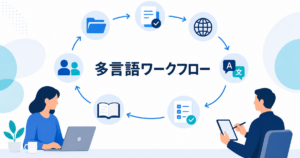
Most teams end up with a hybrid approach: AI translation for the initial draft, human review for documents that need it, and a glossary that improves quality over time. This is an efficient model that captures the speed of AI while maintaining the quality standards your business requires.
To make this work in practice:
- Tag documents by risk tier when they are created. This makes the review decision automatic.
- Maintain a glossary of approved translations for key terms. This improves AI output quality and reduces review time.
- Track review corrections over time. Patterns in corrections reveal where AI translation is weakest for your content, helping you allocate review resources more effectively.
- Set turnaround expectations for each tier. Tier 1 documents are available immediately. Tier 2 takes a day for light review. Tier 3 takes longer for professional review.
Tools like Jitan Translate provide AI-assisted translation drafts across PDF, DOCX, PPTX, and XLSX formats. Your team then applies the appropriate level of review based on the document type, audience, and risk level.
The National Institute of Standards and Technology (NIST) AI Risk Management Framework recommends that organizations establish clear processes for evaluating AI outputs based on context and risk, which aligns with the tiered review approach described here.
Source: https://www.nist.gov/itl/ai-risk-management-framework